

“A Stronger Foundation and A Safer Home”
Your home is our priority. Reliable solutions to protect, repair, and improve your house.
¿What Is a Foundation?
Function:
A home’s foundation is more than just concrete — it’s what keeps your house stable, safe, and dry. The type of foundation you choose affects everything from your home’s durability and energy efficiency to its long-term repair and maintenance needs.
Factors:
Foundations aren’t one-size-fits-all. The right option depends on your climate, soil conditions, and whether you want extra storage or living space. Below, we’ll compare the most common foundation types, explain their pros and cons, and help you understand which one might be the best fit for your home.
Services
A concrete slab foundation is a flat layer of concrete poured directly onto the ground. It’s one of the most common foundation types in the U.S., especially in warmer regions where frost is not a concern. Slabs are cost-effective and fast to install, making them popular in new construction and budget-friendly builds.
Crawl space foundations raise the home above the ground, leaving a small, accessible space beneath the house. This space provides easy access to plumbing, electrical systems, and other utilities, making maintenance more convenient.
A basement foundation provides a full-height space below ground level that can be used as additional living or storage space. Basements are common in colder climates, where the foundation needs to be deep to avoid frost.
Pier and beam foundations use vertical posts (piers) to support beams that hold up the house. This type of foundation is ideal for homes built on uneven or sloped terrain, as it allows for elevation adjustments.
Pile foundations consist of long, cylindrical supports (steel, concrete, or timber) driven deep into the soil to support the home on solid ground. These foundations are particularly suited for large buildings or homes in flood-prone areas.
A T-shaped foundation is a traditional foundation method that involves placing a T-shaped footing below the frost line in the ground to support the walls. This type of foundation is durable and effective in cold climates but may require more materials and labor, making it a more expensive option.
A raft, also known as a mat foundation, is a large, thick slab that covers the entire footprint of the building. It spreads the load across a wide area, like a “raft” floating on the soil. This type of foundation is ideal for weak or expansive soils where other foundation types might settle unevenly.
Drilled shaft foundations, or caissons, are deep foundations similar to piles but with larger shafts. They are used to support heavy structures, especially in areas where the soil near the surface is not strong enough to bear the load.
A roofing system is essential for your home’s protection, structural integrity, and insulation. It consists of various materials and layers designed to shield your home from environmental factors like rain, wind, and temperature fluctuations. Roofing systems vary by material, including asphalt shingles, metal panels, tiles, and wood shakes, each offering distinct benefits suited to specific climates and home styles.
¿What Are the Different Types of Roofs?
- Asphalt Shingle Roofs.
- Metal Roofs.
- Clay Tile Roofs.
- Flat Roofs.
- Wood Shake Roofs.
- And Others.
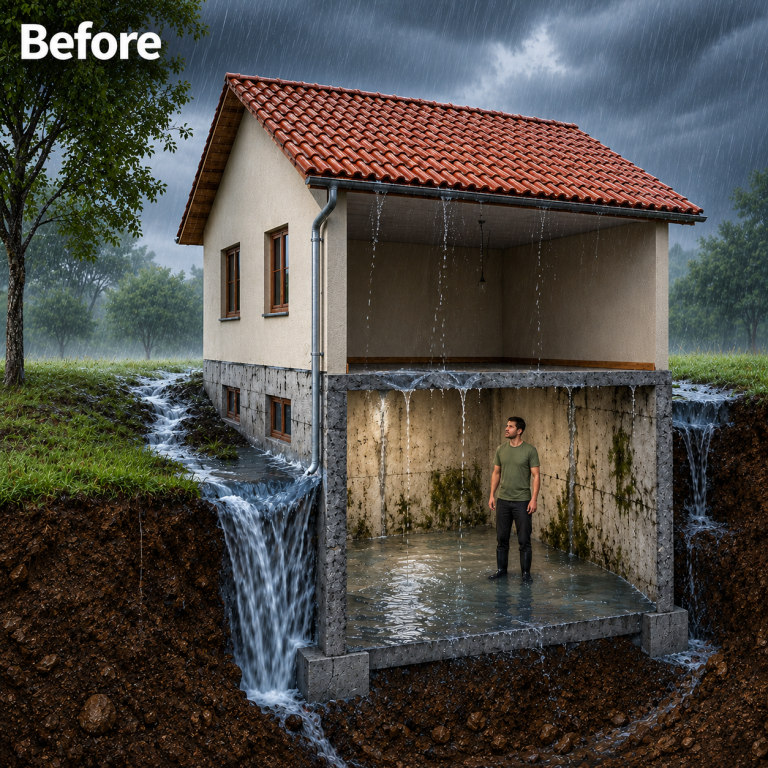
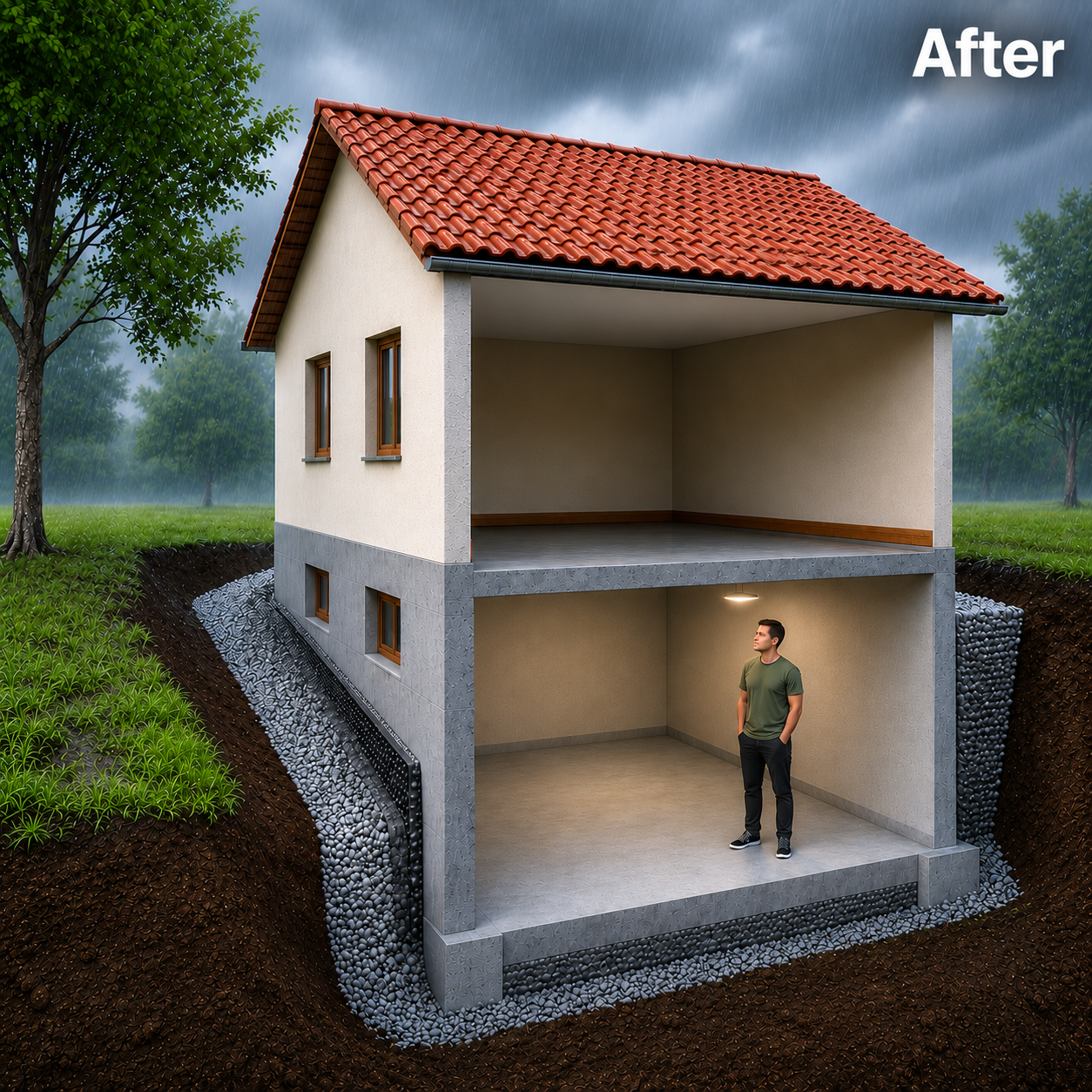
Before/After
Heavy rain and foundation cracks can cause water leaks, moisture, mold, and costly damage to your home.
Don’t wait for the problem to get worse. Protect your foundation, your basement, and your home.
See the difference. Protect your home.
Want to know how much it could cost? Get a FREE quote today.
Contact Us